
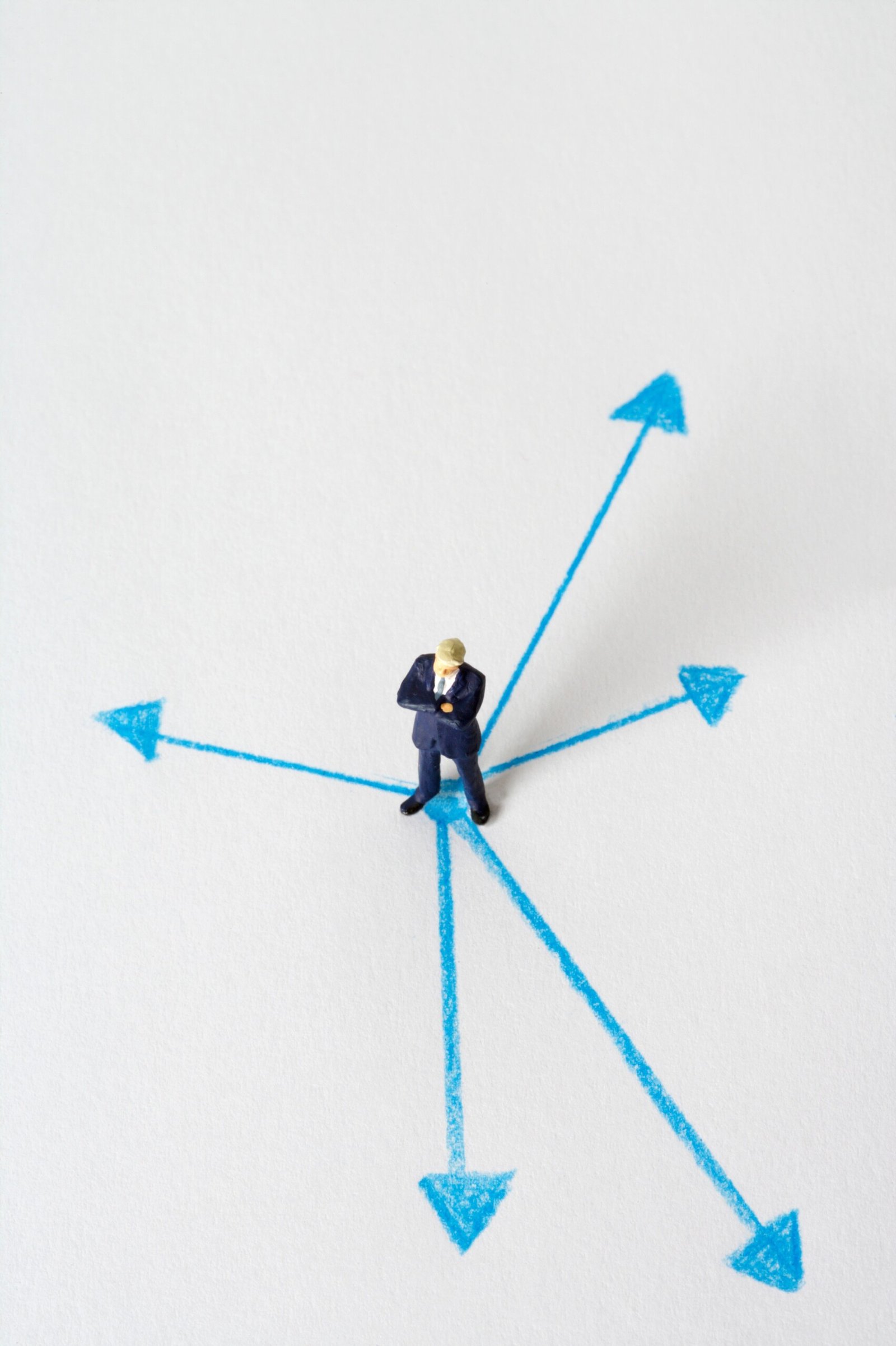
Life Is Mostly Decisions Disguised as Days
Where should I work?
Should I leave?
Should I buy?
Should I invest?
Should I sell?
Should I start?
Should I wait?
Should I reply?
Should I follow up?
Should I say yes?
Should I say no?
By lunchtime, the average adult has made enough small decisions to qualify for an unofficial management position in their own existence.
Some decisions are trivial.
Others alter entire careers, businesses and relationships.
Yet we are rarely taught how to make decisions.
We are taught information.
Formulas.
Rules.
Processes.
But decision-making itself is often learned through experience, mistakes and the occasional evening spent staring at a ceiling wondering whether you just ruined your life.
The good news is that decisions can be improved.
Not perfected.
Improved.
And that distinction matters.
The Goal Is Not the Perfect Decision
One of the biggest causes of overthinking is the belief that somewhere there is a perfect choice waiting to be discovered.
If we research enough, analyze enough and ask enough people, certainty will eventually arrive.
Often it does not.
Major decisions typically involve incomplete information.
If the outcome were guaranteed, it would not be a decision.
It would be an instruction.
Consider starting a business.
You cannot know exactly:
- how customers will respond;
- what competitors will do;
- how the economy will change;
- or whether you will still enjoy the work in three years.
You can research.
You can reduce risk.
You cannot eliminate uncertainty.
Waiting for certainty therefore becomes a decision by itself.
Usually the decision to do nothing.
Smart People Are Particularly Good at Overthinking
Intelligence can create a funny problem.
The smarter you are, the more arguments you can produce for every possible option.
You can imagine:
- opportunity;
- downside;
- alternative downside;
- opportunity cost;
- second-order effects;
- what your friend will say;
- what your future self may think;
- and sixteen unlikely disasters.
Soon, thinking stops creating clarity.
It creates fog.
Overthinking feels productive because the brain is active.
But activity is not progress.
At some point, analysis becomes avoidance.
Separate Reversible Decisions From Irreversible Ones
This is one of the most useful decision-making frameworks.
Some decisions are difficult to undo.
Others can be changed easily.
Buying an expensive property is relatively difficult to reverse.
Trying a new software tool is easy to reverse.
Getting married is a high-consequence commitment.
Publishing one blog post is not.
Starting a small side project is reversible.
Selling an entire company is less so.
The mistake is giving every decision the same emotional weight.
Low-risk reversible decisions should be made quickly.
High-impact irreversible decisions deserve more analysis.
This preserves mental energy for questions that actually require it.
Ask: What Happens if I Am Wrong?
Fear often becomes vague.
Vague fear grows.
Specific fear becomes manageable.
Instead of saying:
“This could go badly,”
ask:
“What exactly happens if this decision is wrong?”
Suppose you launch a small business idea.
Worst realistic case:
You spend several thousand dollars and a few months learning that demand is weak.
Painful?
Possibly.
Life-destroying?
Probably not.
Now compare that with investing your life savings into the same untested idea.
The decision is different because the downside changed.
Risk should be evaluated through consequences, not emotion.
There Is a Difference Between Risk and Uncertainty
People often use these words interchangeably.
Risk can sometimes be estimated.
Uncertainty cannot.
If you invest in a diversified market portfolio, historical volatility provides some understanding of risk.
If you launch a completely new product, many outcomes remain uncertain because there is limited data.
The response should not be paralysis.
It should be experimentation.
When uncertainty is high, make smaller bets.
Test.
Observe.
Adjust.
This is how entrepreneurs operate intelligently.
Not by knowing the future.
By limiting the cost of being wrong while preserving the benefit of being right.

The 70 Percent Rule
For many ordinary business and life decisions, waiting until you have 100 percent of the information is inefficient.
By the time complete information arrives, the opportunity may be gone.
A practical approach is to act when you have enough information to make a reasoned decision—perhaps around 70 percent.
This is not a scientific threshold.
It is a mindset.
You gather sufficient information.
Identify major risks.
Understand the downside.
Then move.
The remaining uncertainty is accepted rather than endlessly researched.
Use a Decision Journal
One reason people do not improve their judgment is that memory cheats.
If an investment performs well, we remember how confident we were.
If it performs badly, we remember the warnings.
A decision journal fixes this.
Before an important decision, write:
- what you decided;
- what information you used;
- what assumptions you made;
- what you expect to happen;
- what could go wrong;
- and why you chose the option.
Then review later.
This teaches you whether your process was good even if the outcome was bad.
That matters because good decisions can produce bad outcomes.
Bad decisions can occasionally produce good outcomes.
A reckless investment may make money.
That does not make recklessness intelligent.
Outcomes and Decision Quality Are Different
Suppose someone drives home after drinking heavily and arrives safely.
Good outcome.
Terrible decision.
Another person launches a carefully researched business shortly before an unexpected global crisis destroys demand.
Bad outcome.
The original decision may still have been reasonable.
If we judge decisions only by outcomes, we learn the wrong lessons.
Decision quality should be evaluated based on the information available at the time.
This is essential in business.
Managers need to distinguish:
“Did we make a poor decision?”
from:
“Did a reasonable decision encounter an unfavorable result?”
The response should be different.
Stop Asking Too Many People
Advice can improve decisions.
Too much advice can destroy clarity.
Ask five people whether you should change careers and you may receive:
- absolutely;
- definitely not;
- wait;
- start a business instead;
- move countries;
- and somehow one recommendation to buy real estate.
Advice is influenced by the advisor’s:
- risk tolerance;
- experiences;
- values;
- financial position;
- personality;
- and regrets.
Advice should provide perspective.
It should not replace ownership.
At some point, it is your decision.
Ask People Who Have Actually Done the Thing
Not all opinions deserve equal weighting.
If you are considering entrepreneurship, talk to entrepreneurs.
If you are considering a profession, speak with people several years into that profession.
If you are considering moving to another country, speak with people who actually live there.
Experience does not guarantee wisdom.
But relevant experience improves the quality of information.
The internet has made opinions incredibly easy to obtain.
That does not mean they are equally useful.
Decisions Improve When Your Finances Improve
Financial stability affects decision quality.
A person with no emergency fund approaches a career decision differently from someone with a year of expenses saved.
A business with no cash reserves approaches a customer negotiation differently from a well-capitalized company.
Financial desperation shrinks time horizons.
You start optimizing for relief.
Not value.
This is why good money management creates more than financial benefits.
It creates decision space.
The ability to wait.
Negotiate.
Experiment.
Walk away.
Those are strategic advantages.

The Power of Saying No
Many poor decisions are not active mistakes.
They are unwanted commitments we failed to reject.
The meeting.
The client.
The project.
The purchase.
The obligation.
The partnership.
Every yes creates a cost.
Time.
Attention.
Money.
Energy.
Opportunity.
A mature decision process considers not only:
“Is this good?”
but:
“Is this better than what it will replace?”
A good opportunity can still deserve a no.
That is one of the hardest lessons in growth.
When You Should Trust Instinct
Intuition gets both too much respect and too little.
“Trust your gut” is useful only when your gut has experience.
An experienced entrepreneur may sense a deal is problematic before articulating why.
Years of pattern recognition are working in the background.
A beginner’s instinct may simply be fear.
The more experience you have in a domain, the more weight intuition can deserve.
But instinct should still be questioned when stakes are high.
Ask:
“What am I noticing?”
Often, intuition can be translated into specific concerns.
Make Decisions at the Right Energy Level
Decision fatigue is real.
Important decisions made:
- late at night;
- while angry;
- while exhausted;
- immediately after bad news;
- or under unnecessary time pressure
are often worse.
If the decision can wait, allow your nervous system to settle.
This is not weakness.
It is process control.
We would never intentionally run a financial model with corrupted data.
Yet we routinely make major decisions with a corrupted mental state.
Create Personal Decision Rules
Rules reduce repeated thinking.
Examples:
- I do not make major purchases the same day I discover them.
- I do not accept meetings without knowing the purpose.
- I do not invest in something I cannot explain.
- I do not make permanent decisions during temporary emotional crises.
- I sleep on major commitments.
- I follow up before assuming silence means rejection.
These rules create consistency.
They protect you from having to rediscover wisdom every week.
Final Thought: A Good Life Is Not Built From Perfect Choices
You will make mistakes.
Some will be expensive.
Some will be embarrassing.
Some decisions that appear brilliant today may look foolish later.
That is unavoidable.
The objective is not a flawless decision record.
It is a strong decision process.
Gather useful information.
Understand downside.
Distinguish reversible from irreversible.
Ask experienced people.
Avoid emotional extremes.
Make the decision.
Learn.
Adjust.
Move again.
Life rewards motion guided by judgment.
Not endless analysis in pursuit of certainty that does not exist.
Sometimes the best decision is simply the one that is thoughtful enough—and finally made.